

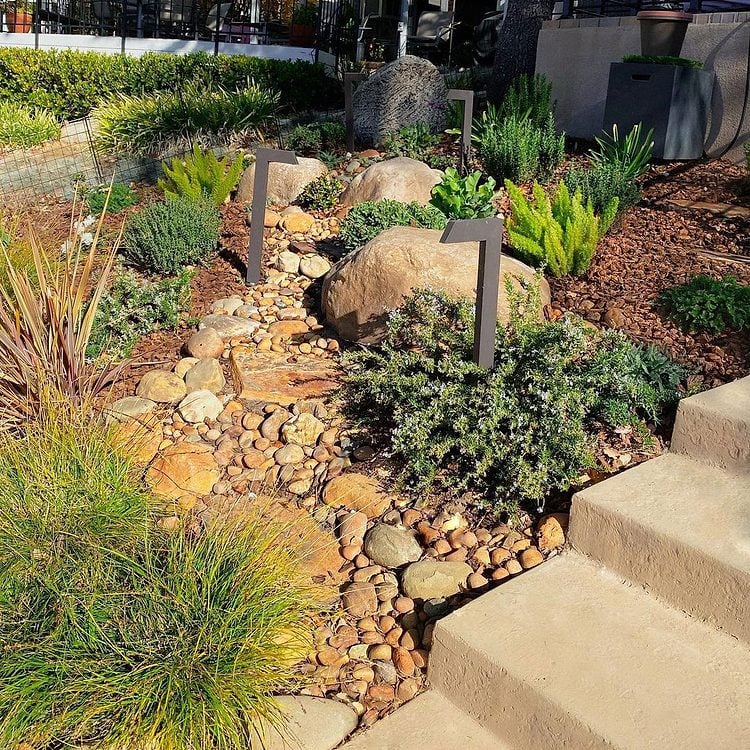
A dry creek bed can turn an awkward drainage route into a landscape feature that looks intentional. Instead of allowing stormwater to carve muddy channels through lawn or planting beds, a shallow stone-lined channel gives runoff a controlled path while adding texture to the yard.
The strongest dry creek bed ideas combine practical grading with natural-looking stone placement rather than creating a rigid trench.
Start With the Natural Direction of Runoff
Before placing stone, watch where water already travels during a moderate rain. Low spots, downspout discharge points, slopes, and compacted soil often reveal the easiest route.
A creek bed generally works better when it follows existing contours instead of cutting directly across them. Gentle curves also look more believable than perfectly straight channels.
Shape the Bed With Uneven Edges
Natural streams rarely maintain identical widths. Varying the channel slightly helps a residential installation blend with surrounding lawn, mulch, and planting beds.
Keep the bottom low enough to accept runoff, but avoid unnecessarily deep excavation. Water should enter the channel rather than collect beside it.
Mix Stone Sizes for a More Natural Look
Using one size of river rock can make a creek bed resemble a decorative strip. Combining larger stones along the edges with smaller material through the center creates a more convincing effect.
Homeowners browsing broader outdoor water planning ideas may notice that stone, vegetation, and changes in elevation often work better together than any single material.
Use heavier stones where water enters rapidly so they are less likely to shift during storms.
| Design Element | Useful Approach | Main Benefit |
|---|---|---|
| Channel shape | Gentle curves | Natural appearance |
| Stone mix | Several sizes | Better texture |
| Entry area | Larger rock | Handles faster flow |
| Edges | Plants and boulders | Softer transition |
Blend the Creek Bed Into Planting Areas
A drainage feature doesn’t need to sit alone in open lawn. Ornamental grasses, sedges, groundcovers, and shrubs can soften its edges and make it feel connected to the rest of the landscape.
Ideas associated with relaxed outdoor living can also provide visual inspiration when choosing materials and planting styles, though drainage performance should still determine the bed’s final shape.
Leave enough open channel space so mature plants won’t block flowing water.
Choose a Safe Discharge Point
Moving water away from one wet spot only helps when it reaches somewhere appropriate. The lower end of a creek bed should lead toward an area where runoff can spread, infiltrate, or continue through an approved drainage route.
Broader property improvement planning can be useful context when coordinating drainage work with landscaping, patios, fencing, or other yard projects.
Avoid directing concentrated runoff toward neighboring property, foundations, retaining walls, or areas already struggling with erosion.
Where Dry Creek Beds Often Go Wrong
A common mistake is treating the project entirely as decoration. A beautiful stone channel that sits higher than surrounding ground may receive almost no runoff.
Another problem is using lightweight gravel on a steep section. Strong flow can carry it downhill and leave bare soil exposed. Poor discharge planning can also transfer the original problem somewhere else instead of solving it.
The decorative choices should support the water path, not determine it.
Frequently Asked Questions
Does a dry creek bed need landscape fabric underneath?
Fabric may help separate stone from soft soil and reduce migration, but it isn’t automatically suitable for every drainage condition. Soil type, expected water volume, and whether infiltration is desired should influence the base design.
How wide should a residential dry creek bed be?
Width depends on runoff volume, slope, available space, and the desired appearance. A small decorative drainage route may be narrow, while areas receiving several downspouts or hillside runoff may need substantially more capacity.
Can plants grow beside a dry creek bed?
Yes. Plants can make the feature look established and help stabilize nearby soil. Choose species suited to the site’s moisture pattern and keep stems, roots, and mulch from obstructing the main flow path.
Build Around the Water First
A successful dry creek bed should look attractive on a sunny day and still make sense during heavy rain. Begin with slope, entry points, and discharge, then use stone and planting to disguise the engineering. Once the water route works, natural curves and varied materials can turn a drainage solution into one of the yard’s strongest visual features.