


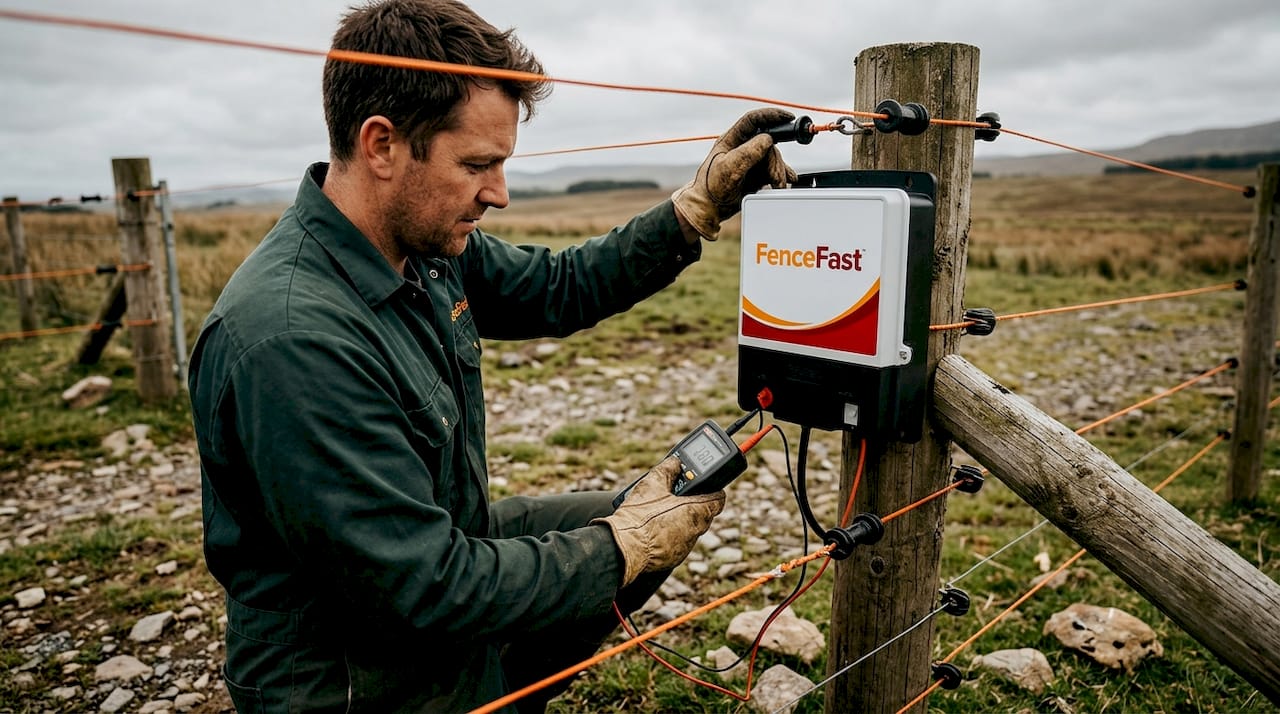
While urban electric fences focus on protecting walls and deterring human intruders, agricultural electric fencing transforms how farmers manage land, pastures, and livestock. Rather than relying on heavy, expensive timber and barbed-wire barriers that animals can lean against, crush, or push through over time, an agricultural electric fence acts as a psychological barrier. Once an animal touches the wire and experiences a brief, memorable shock, it learns to respect the boundary—even when the fence consists of just one or two lightweight strands.
From boosting pasture yields through intensive rotational grazing to protecting poultry, sheep, and cattle from nocturnal predators, electric fencing is one of the highest-return investments a modern farm or ranch can make. Below is a complete guide to designing, sizing, and managing electric fences for livestock containment and predator control.
1. How Livestock Learn to Respect an Electric Fence
Traditional fences rely on brute physical strength to hold animals back. Cattle rub against posts, goats stand on lower wires, and pigs dig beneath fences—resulting in constant post repairs and broken wires.
An electric fence replaces physical force with behavioral conditioning:
- First Contact: Curious animals naturally investigate new boundaries with their wet noses or ears—the most sensitive, conductive parts of their bodies.
- Immediate Conditioning: The sharp, non-lethal pulse (typically 5,000V to 8,000V) startles the animal without causing tissue damage.
- Long-Term Respect: Within a few days, livestock associate the visual sight of the wire with the unpleasant shock and stay well clear of it, reducing wear and tear on posts and wires by up to 80%.
Training Tip: Always introduce newly acquired livestock to electric fencing inside a sturdy, well-energized training paddock for 48 to 72 hours before moving them into large pastures or temporary polywire subdivisions. Once trained, animals rarely test the fence again.
2. Wire Heights and Strand Configurations by Animal Type
Different livestock species vary dramatically in height, coat thickness, and behavior. A single strand at chest height easily holds trained dairy cows, whereas sheep and goats require multiple closely spaced strands to penetrate thick wool and prevent ducking underneath.
| Livestock / Animal Type | Recommended Number of Strands | Wire Heights from Ground | Minimum Target Voltage | Key Design Notes |
| Dairy & Beef Cattle | 1 – 3 strands | 75cm – 90cm (single); or 45cm, 75cm, 105cm | 4,500V – 6,000V | Calves require a lower bottom wire (~40cm) so they do not walk underneath. |
| Sheep & Goats | 4 – 6 strands | 15cm, 30cm, 50cm, 70cm, 95cm | 6,000V – 8,000V | Thick wool insulates sheep; high voltage and alternating live/earth wires improve shock delivery. |
| Pigs & Hogs | 2 – 3 strands | 15cm, 30cm, 50cm | 5,000V – 6,500V | Low bottom wire stops pigs from rooting their snouts underneath the fence. |
| Horses & Donkeys | 2 – 4 strands (Polytape) | 50cm, 90cm, 130cm | 4,500V – 6,000V | Use wide visible polytape (20mm–40mm) instead of thin wire so fast-moving horses see it clearly. |
| Poultry (Free-Range) | Electric Poultry Netting | 105cm – 120cm tall mesh | 5,000V – 7,000V | Close bottom mesh keeps chickens inside while blocking foxes, mongooses, and stray dogs outside. |
3. Rotational Grazing: Maximizing Pasture Productivity
One of the greatest financial advantages of agricultural electric fencing is enabling rotational grazing (also known as strip grazing or cell grazing). Instead of letting cattle or sheep roam freely across one massive pasture—where they overgraze their favorite sweet grasses and trample the rest—farmers divide land into smaller paddocks using portable electric fencing.
How Rotational Grazing Works
- Permanent Perimeter Fence: Install a sturdy 3-to-5-strand high-tensile galvanized steel fence around the outer boundary of the farm using a powerful mains or solar energizer.
- Temporary Subdivision Paddocks: Use lightweight step-in fiberglass or plastic posts, geared reels, and polywire or polytape connected to the main fence line to subdivide pastures into smaller grazing cells.
- Daily or Multi-Day Moves: Herd livestock into a fresh paddock for 1 to 3 days until they graze the pasture down evenly, then reel up the portable wire and move them to the next strip.
Benefits of Rotational Grazing
- 30% to 50% More Forage Yield: Grasses get 25 to 40 days of uninterrupted rest between grazing cycles, allowing deep root systems to recover and regrow lush forage.
- Natural Soil Fertilization: Manure and urine are distributed evenly across paddocks rather than concentrated around shade trees and water troughs.
- Lower Feed Costs: Healthier pastures reduce reliance on expensive supplemental hay and commercial feed concentrates during dry seasons.
4. Predator Control: Protecting Livestock from Nocturnal Threats
Predators such as hyenas, jackals, foxes, wild dogs, leopards, and feral pigs cause devastating losses to sheep flocks, goat herds, calves, and free-range poultry. Standard woven wire fences alone rarely stop determined predators, which easily dig underneath or climb over mesh.
To turn an agricultural fence into an effective predator exclusion barrier, incorporate three critical design upgrades:
- Anti-Dig Bottom Trip Wire: Run a live offset wire 10cm to 15cm above ground level and 15cm to 20cm outside the main fence line. Predators investigating the bottom of the fence nose the live wire before they can begin digging underneath.
- Alternating Live and Grounded Strands: Predators attacking in dry seasons or rocky pastures may not get a strong ground return through dry soil. Alternating live (+) and grounded (–) strands ensures that any predator pushing its head between wires bridges both conductors simultaneously for a full-strength shock.
- Outrigger / Anti-Climb Top Wires: Add an outward-angled bracket at the top of existing woven-wire fences carrying two live strands to stop climbing predators (such as leopards or wild cats) from scaling over the top.
5. Choosing the Right Energizer for Farm Perimeters
Agricultural fences face much heavier vegetation loads than urban wall-top fences because grass, weeds, and bushes grow directly beneath the lower wires. When choosing an agricultural energizer:
- Prioritize Low-Impedance Technology: Low-impedance energizers sense vegetation contact and push reserve energy into each pulse, maintaining effective voltage even when weeds brush against the bottom strand.
- Oversize Your Joules: Never buy an energizer rated barely for your current fence length. If you have 3 kilometers of multi-strand fencing, choose an energizer rated for at least 3 to 5 Output Joules so you have plenty of reserve power for future paddock subdivisions and wet-season weed growth.
- Use Solar Power for Remote Pastures: Pair a 12V low-impedance energizer with a 30W to 50W solar panel and a deep-cycle battery so distant grazing blocks stay energized year-round without running long underground cables from the farmhouse.