


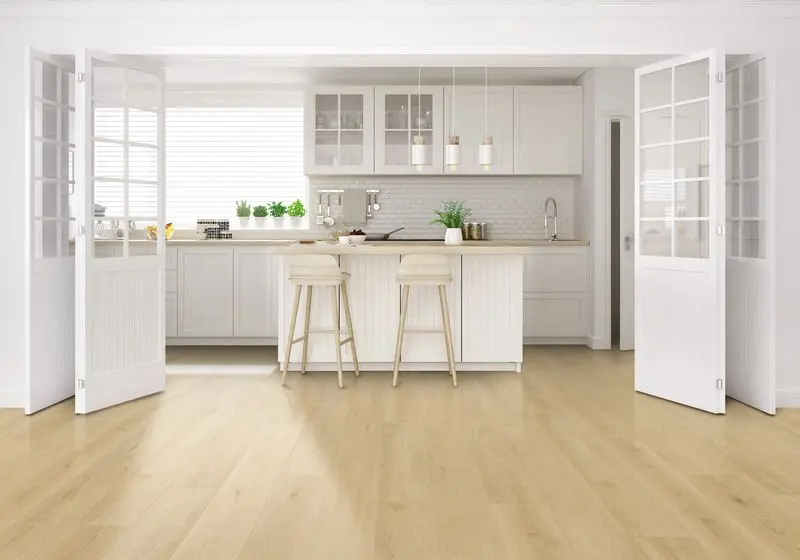
Modern vinyl samples look so much like wood that many shoppers have to touch them to tell the difference. Lower prices and waterproof cores make vinyl tempting, yet many homeowners still wonder whether choosing vinyl means settling for less than real hardwood. The answer depends less on which floor is better overall and more on which qualities matter most in your home.
Luxury vinyl plank flooring matches or outperforms hardwood on water resistance, everyday maintenance, and upfront cost. Hardwood leads on natural character, lifespan, refinishing potential, and long-term home value. Comparing the two on the points that affect daily life makes the right choice much clearer.
Luxury Vinyl Plank Compared to Hardwood
Luxury vinyl plank is as good as hardwood in some areas and not in others. LVP is waterproof, scratch-resistant, and usually costs less to buy and install. Hardwood offers real wood character, can be refinished for decades, lasts longer, and adds more value to a home.
LVP comes out ahead on:
- Water and spill resistance
- Low-maintenance cleaning
- Upfront material and labor cost
- Easy click-lock installation
Hardwood leads on:
- Natural grain and character
- Overall lifespan
- Refinishing potential
- Resale value
What Separates LVP From Hardwood
The two floors are built from completely different materials, and that construction explains most of the differences in performance.
How Luxury Vinyl Plank Is Built
LVP is a layered synthetic product. A clear wear layer protects the surface, a printed image layer creates the wood look, and a rigid core gives the plank its strength. Stone polymer composite (SPC) cores are dense and stable, while wood polymer composite (WPC) cores feel slightly softer underfoot. Many planks also include an attached backing pad for comfort and sound control.
How Solid and Engineered Hardwood Are Built
Solid hardwood is milled from a single piece of wood, usually 3/4 inch thick, with tongue-and-groove edges. Engineered hardwood bonds a real hardwood top layer to a plywood or composite base, which improves stability in changing humidity. Both offer the look and feel of real wood because the surface is real wood.
Look and Feel Underfoot
Appearance is often the first point of comparison. Modern luxury vinyl plank flooring has closed much of the gap, though real wood still has qualities vinyl cannot fully copy.
Realism of Modern LVP
High-quality LVP uses detailed printing and embossed textures that follow the printed grain. Better products include more unique plank designs, which reduce repeat patterns across the floor. Lower-cost options may show the same knot or grain pattern several times in one room.
Natural Character of Hardwood
No two hardwood boards are identical. Grain, color variation, and mineral streaks give the floor a depth that changes with light and age. Hardwood also feels warmer and more solid underfoot, while some LVP can sound slightly hollow when installed as a floating floor.
Durability and Daily Wear
Both floors handle daily life well, though they respond differently to scratches, dents, and sunlight. These differences matter most in busy homes:
- Scratches and Pets: LVP protection depends on wear layer thickness, measured in mils. Planks with a 20 mil wear layer resist pet claws and grit well, while hardwood finishes can show fine scratches sooner.
- Dents From Heavy Furniture: Hardwood can dent from dropped objects or heavy furniture legs, especially in softer species. Rigid core LVP resists denting, though sharp, concentrated weight can still leave marks.
- Fading in Sunlight: Both floors can change color with strong sun exposure. Hardwood darkens or lightens naturally over time, while some LVP includes UV protection to limit fading.
- Repairs: Damaged LVP planks are replaced individually. Hardwood scratches and worn areas can be sanded and refinished, restoring the floor without replacing boards.
Water and Moisture Resistance
Water is where LVP holds the clearest advantage. Rigid core vinyl planks are waterproof, which makes them a practical choice for kitchens, laundry rooms, bathrooms, and finished basements.
Hardwood absorbs moisture and can cup, swell, or stain when water sits on the surface. Engineered hardwood handles humidity changes better than solid, though neither should face standing water.
Lifespan and Refinishing
Most LVP lasts about 10 to 25 years, depending on wear layer thickness, traffic, and care. Once the wear layer wears through, vinyl cannot be sanded or refinished, and the planks must be replaced.
Solid hardwood can last for generations. A 3/4 inch board can typically be sanded and refinished several times, giving the floor a fresh surface and even a new stain color. Engineered hardwood can also be refinished, with the number of sandings limited by the thickness of its wear layer.
Cost Over the Life of the Floor
Price comparisons change depending on whether you look at the first invoice or the full life of the floor. Both views matter.
Upfront Material and Installation Cost
Luxury vinyl plank flooring usually costs less to buy and install than hardwood. Click-lock planks float over the subfloor, which reduces labor time and skips sanding and finishing. Premium LVP with a thick wear layer can approach the cost of entry-level hardwood, though, which makes comparing specific products more useful than comparing categories.
Long-Term Value and Replacement
Over several decades, the math can shift. LVP may need full replacement once or twice in the time a hardwood floor needs only periodic refinishing. Refinishing typically costs far less than tearing out and replacing a floor, which narrows the long-term price gap.
Home Value and Resale
Buyers often view hardwood as a premium feature, and real estate listings frequently highlight it. LVP has gained acceptance, especially in kitchens and lower levels, but rarely carries the same appeal in main living areas.
Hardwood projects rank near the top for cost recovery at sale, with the highest interior return coming from refinishing hardwood floors at 147% and new wood flooring at 118%. That difference can matter for homeowners planning to sell within a few years.
Installation and Subfloor Needs
Installation methods differ, which affects cost, timing, and whether a DIY project is realistic. Keep these points in mind:
- LVP clicks together and floats
- Hardwood is nailed, stapled, or glued
- Both need a flat, clean subfloor
- LVP installs easily over concrete
- Solid hardwood is not for below grade
- Hardwood needs acclimation before install
Vinyl is far more DIY-friendly, while hardwood usually calls for a professional installer with the right tools.
Comfort, Sound, and Indoor Air
LVP with an attached pad feels soft underfoot and reduces footstep noise, though floating floors can sound slightly hollow. Hardwood feels firm and warm, and nail-down installations over a good underlayment produce a solid, quiet sound.
Indoor air quality matters for both floors, since Americans spend approximately 90% of their time indoors. Choosing LVP or hardwood with a low-emission certification such as FloorScore helps keep that indoor air cleaner. Factory-finished floors also avoid the odors of on-site finishing.
Which Floor Fits Each Room?
Many homes use both floors, placing each where it performs best. These room-by-room guidelines help with planning:
- Kitchens: LVP handles spills and dropped items well, though hardwood remains a popular choice for open layouts that flow into living areas.
- Bathrooms and Laundry Rooms: LVP is the safer option thanks to its waterproof core.
- Basements: LVP over a proper moisture barrier performs well below grade, where solid hardwood should not be installed.
- Living and Dining Rooms: Hardwood adds warmth, character, and resale appeal in main living spaces.
- Bedrooms: Either floor works well, and hardwood with area rugs is a classic choice.
- Rentals: LVP holds up to tenant wear and costs less to replace.
- Homes With Pets: LVP with a thick wear layer resists claws and accidents, while harder hardwood species with matte finishes also perform well.
Engineered Hardwood: A Middle Ground
Engineered hardwood combines a real wood surface with a layered core that resists movement from humidity. The floor looks and feels like solid hardwood, installs over more subfloor types, and can often go in rooms where solid wood would struggle.
Engineered hardwood is still wood, and standing water remains a risk. For homeowners who want real wood in a kitchen or over concrete, engineered flooring offers a balance between hardwood character and practical stability.
Important FAQs
Does LVP add value to a home like hardwood?
No, LVP usually does not add the same value as hardwood. Buyers tend to see hardwood as a premium feature in main living areas, while LVP is valued more for practicality in kitchens, bathrooms, basements, and rentals.
How long does luxury vinyl plank last?
Luxury vinyl plank typically lasts 10 to 25 years. Lifespan depends on wear layer thickness, foot traffic, sunlight, and care, and floors with thicker wear layers in quieter rooms usually last toward the upper end of that range.
Takeaway
Luxury vinyl plank flooring is as good as hardwood where water resistance, low maintenance, and budget matter most. Hardwood remains the stronger choice for natural character, long lifespan, refinishing, and resale value. Many homes benefit from both, with LVP in kitchens, bathrooms, and basements and hardwood in living spaces and bedrooms. Matching the floor to the room, the household, and the long-term plan leads to a choice that holds up for years.
Rustic Wood Floor Supply stocks hardwood and luxury vinyl side by side, which makes direct comparisons simple before you commit to either floor. Their team offers personalized consultations that walk through style, performance, and installation options for the rooms you are planning. Bring your room sizes and goals to any of the stores, and the team will help you build a plan that fits both your home and your budget.
Read More: Oil-Based vs. Water-Based Floor Finishing: Which Wears Better After 10 Years


