

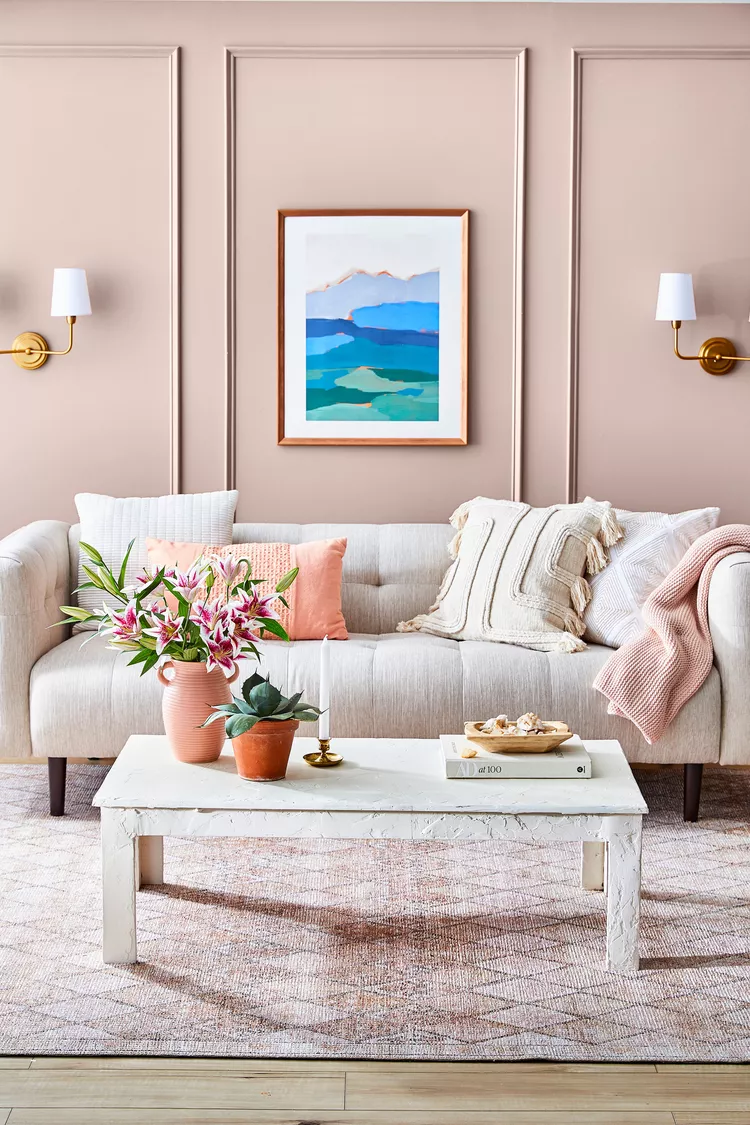
Picture frame molding adds architectural definition without requiring major construction. By arranging slim trim into balanced wall rectangles, you can give plain rooms more depth, proportion, and polish while still keeping the overall interior calm.
The strongest picture frame molding ideas work with a room’s existing scale rather than competing with it. Spacing, wall height, furniture placement, and paint color all matter more than adding as many boxes as possible.
Start With Proportion Before Choosing a Pattern
A successful layout usually begins with the furniture and openings already in the room. Moldings look more intentional when panels relate to a sofa, console, fireplace, doorway, or window instead of being divided into identical sections without context.
For rooms already organized around a fireplace, browsing broader fireplace design inspiration can help clarify how wall trim should frame the focal point rather than crowd it.
Use the Wall’s Centerlines
Large wall panels often look balanced when their centers align with major furniture pieces. Narrower side panels can then absorb leftover wall space near doors and corners.
Ceiling height matters too. Tall rooms can handle elongated rectangles, while shorter rooms usually benefit from wider proportions that avoid making the walls feel stretched.
Decide Whether the Molding Should Blend or Contrast
Painting molding the same color as the wall creates subtle shadow lines. This approach suits modern interiors because the effect comes from depth instead of strong color contrast.
A contrasting trim color feels more traditional and draws greater attention to the panel geometry. For more ideas involving trim, finishes, and room detailing, interior styling references can provide useful visual direction.
| Approach | Visual Effect | Works Well In |
|---|---|---|
| Same-color trim | Quiet and dimensional | Modern rooms |
| Contrasting trim | Formal and defined | Traditional spaces |
| Tall rectangles | Adds vertical emphasis | High ceilings |
| Wide panels | Creates visual breadth | Low or average ceilings |
Extend the Detail Beyond Formal Rooms
Picture frame molding isn’t limited to dining rooms and entry halls. It can add structure behind a bed, create rhythm along a hallway, or turn an otherwise empty staircase wall into a finished architectural surface.
Connections to outdoor architecture can also inspire interior proportions. Looking through exterior architectural details may reveal repeating window, column, and façade patterns that translate surprisingly well to indoor wall layouts.
Try Partial-Wall Applications
Molding can stop at chair-rail height instead of covering the entire wall. That approach works particularly well in breakfast rooms, bedrooms, and compact entryways.
Another option is using one oversized panel behind a focal piece rather than repeating boxes across every surface.
What People Often Get Wrong
The most common mistake is treating molding as decoration that can be added after everything else has been planned. Poorly positioned rectangles may collide visually with switches, outlets, doors, artwork, or furniture.
Tiny equal-sized panels can also make a large wall feel busier rather than richer. Measure the wall carefully and test the pattern with painter’s tape before cutting trim. Seeing full-size proportions is far more reliable than judging a layout from a small sketch.
Frequently Asked Questions
Should picture frame molding cover every wall?
No. One feature wall or a few strategically chosen surfaces may create more impact than covering the entire room, especially in smaller spaces.
Can picture frame molding look modern?
Yes. Slim profiles, larger panels, simple spacing, and wall-matched paint can give traditional molding a cleaner contemporary appearance.
How high should picture frame molding be?
There is no universal height. Panel placement should respond to ceiling height, furniture, windows, switches, and the visual proportions of the wall.
Plan the Geometry Before Cutting Trim
Picture frame molding works best when the wall looks composed before the trim is even installed. Tape out several versions, view them from across the room, and adjust spacing around furniture and openings. Once the proportions feel balanced, even inexpensive molding can make a plain wall look intentionally architectural.


